If you have lived in Las Vegas for any length of time, you have probably noticed the white chalky residue on your faucets, the filmy buildup on your shower doors, or the way your soap never quite lathers the way it should. These are all telltale signs of hard water — and while the inconveniences on the surface might seem minor, what is happening inside your pipes and plumbing fixtures is a much more serious story.
Las Vegas consistently ranks among the cities with the hardest water in the United States. The Las Vegas Valley draws most of its water supply from Lake Mead and the Colorado River, both of which carry extremely high concentrations of dissolved minerals — primarily calcium and magnesium — picked up as water flows through limestone and chalk rock formations. According to the Southern Nevada Water Authority, the hardness of local tap water typically measures between 278 and 400 parts per million (PPM), far above the national average of around 60 to 120 PPM.
Understanding how this mineral-laden water interacts with your home’s plumbing system is the first step toward protecting your investment — and your wallet.
What Exactly Is Hard Water?
Hard water is simply water that contains a high concentration of dissolved minerals, particularly calcium carbonate and magnesium. These minerals are completely natural and pose no direct health risk when consumed. However, when hard water is heated or flows through pipes over time, the dissolved minerals precipitate out of the water and form a solid, crusty deposit known as limescale or scale buildup.
This limescale is essentially the enemy of your plumbing system. It clings stubbornly to the inside of pipes, coats heating elements in water heaters, clogs aerators in faucets, and gradually degrades the performance and lifespan of every water-using appliance in your home.
The Hidden Damage Inside Your Pipes
One of the most insidious aspects of hard water damage is that it happens slowly and invisibly — deep inside your plumbing system where you cannot see it until the problem has already become significant.
Scale buildup inside pipes is a gradual but relentless process. As hard water flows through your supply lines and drain pipes day after day, a thin layer of calcium and magnesium deposits adheres to the interior walls. Over months and years, these layers accumulate and progressively narrow the interior diameter of the pipe. What begins as a full-size opening slowly becomes restricted, forcing your water pressure to compensate. You may notice decreased water flow at your faucets and showerheads — but the pressure building behind that restriction is stressing joints, connections, and the pipe walls themselves.
In older homes with galvanized steel pipes, the situation can be especially severe. The rough interior surface of galvanized pipe gives scale an ideal surface to grip and accumulate rapidly. Homes in Las Vegas that still have original steel supply lines from the 1970s or 1980s may have pipes that are nearly entirely blocked with mineral scale — a condition that often leads to sudden pipe failures requiring emergency replacement.
What Hard Water Does to Your Water Heater
Your water heater is perhaps the most vulnerable appliance in your home when it comes to hard water damage — and also one of the most expensive to replace. The combination of heat and hard water is a perfect recipe for accelerated scale accumulation.
Inside a traditional tank water heater, cold water enters and settles at the bottom of the tank, where it is heated by a gas burner or electric heating element. Because minerals precipitate out of water much more rapidly when heated, sediment quickly builds up on the bottom of the tank and around heating elements. This layer of sediment acts as an insulating barrier between the heat source and the water, forcing the heater to work harder and longer to bring water to the desired temperature — dramatically increasing your energy bills.
Beyond energy waste, the trapped heat caused by sediment buildup can overheat the tank lining, accelerating corrosion and weakening the structural integrity of the tank itself. In Las Vegas, where water heaters are already working hard to heat extremely mineral-rich water, units that are not regularly flushed and maintained often fail years before their expected lifespan. The industry average for a tank water heater is 8 to 12 years, but Las Vegas homeowners who do not address hard water issues often find themselves replacing their units in as few as 5 to 7 years.
Fixtures, Faucets, and Appliances Under Attack
The damage from hard water extends well beyond your pipes and water heater. Every water-using fixture and appliance in your home is affected:
- Faucets and Aerators: The small mesh screens (aerators) at the tip of your faucets are designed to regulate flow and reduce splashing. Hard water minerals clog these screens rapidly, reducing flow and forcing water to spray unevenly. Inside the faucet body itself, mineral deposits build up on valve seats and O-rings, causing faucets to drip, leak, and eventually become difficult or impossible to turn.
- Showerheads: The multiple small spray nozzles in a showerhead are prime targets for limescale buildup. As deposits accumulate inside the nozzle passages, spray patterns become uneven and water pressure drops noticeably. In severe cases, nozzles block completely, leaving you with a weak, misdirected shower that barely functions.
- Toilets: Hard water leaves mineral rings and stains inside toilet bowls that are notoriously difficult to remove. More seriously, the fill valve, flapper, and other internal components inside the toilet tank can become encrusted with mineral deposits, interfering with the seal and causing toilets to run constantly — wasting hundreds of gallons of water monthly.
- Dishwashers and Washing Machines: These appliances rely on heating elements and spray arms that are highly susceptible to scale buildup. Hard water causes dishes to emerge with a white film and spots, reduces cleaning effectiveness, and shortens the operational life of both appliances significantly.
- Refrigerator Ice Makers and Water Dispensers: The narrow water lines that supply refrigerator ice makers and water dispensers are particularly vulnerable to mineral blockages, often leading to reduced ice production or complete failure of the water dispenser.
The Financial Cost of Ignoring Hard Water
The cumulative financial impact of hard water on a Las Vegas home can be staggering. Studies by the Water Quality Research Foundation have found that water heaters operating in hard water conditions use up to 29% more energy than units in soft water areas. Pipes can lose up to 75% of their carrying capacity due to scale buildup over time. Appliance lifespans are reduced by an average of 30 to 50%. When you add up the costs of premature appliance replacement, increased energy bills, emergency plumbing repairs, and routine maintenance, the total annual cost to a Las Vegas household can easily reach into the thousands of dollars. Click here for more information.
What You Can Do to Protect Your Plumbing
The good news is that hard water damage is preventable with the right approach:
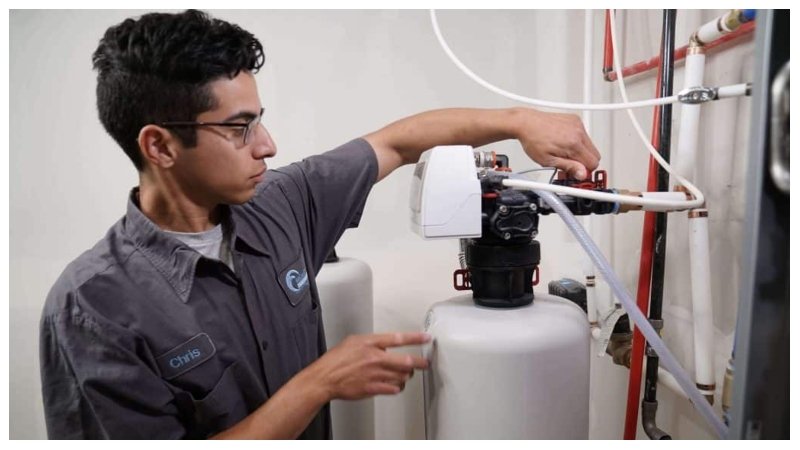
- Install a Whole-House Water Softener: A salt-based ion exchange water softener replaces calcium and magnesium ions with sodium ions, effectively eliminating scale formation throughout your entire plumbing system. This is the most comprehensive solution available for hard water problems.
- Consider a Salt-Free Water Conditioner: For homeowners who prefer to avoid adding sodium to their water, salt-free conditioners (also called descalers) use a template-assisted crystallization process to neutralize minerals and prevent them from adhering to surfaces.
- Flush Your Water Heater Annually: Draining and flushing your water heater tank once a year removes accumulated sediment before it can cause serious damage. A licensed plumber can perform this service quickly and ensure your heater is operating efficiently.
- Install Faucet Filters and Showerhead Filters: While these are point-of-use solutions that do not protect your pipes and appliances, they can help preserve the fixtures they are attached to.
- Schedule Regular Plumbing Inspections: Having a professional plumber inspect your supply lines, fixtures, and appliances periodically allows you to catch hard water damage early — before a minor buildup becomes a major repair.
Hard water is a fact of life in Las Vegas, but the damage it causes to your plumbing does not have to be. At Precision Plumbing, our experienced team has been helping Las Vegas homeowners understand, manage, and overcome the effects of hard water for years. Whether you need a professional water softener installation, a water heater flush and inspection, pipe assessment, or a complete plumbing evaluation, we are ready to help you protect your home and your investment. Do not wait until a costly repair forces your hand — contact us today and let us develop a hard water management strategy tailored to your home.
Precision Plumbing
2470 N Decatur Blvd Suite #170, Las Vegas, NV 89108
Phone: (702) 253-6363
Website: https://www.precisionplumbinglv.com/