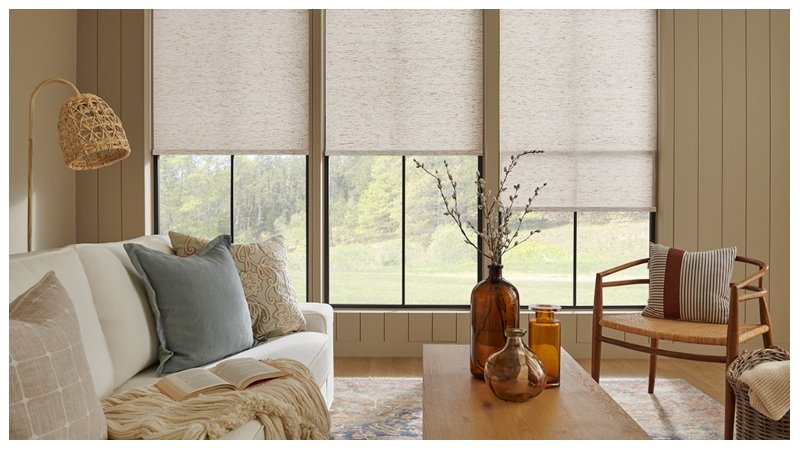
Windows often don’t get the attention they deserve in home design. While people carefully select wall colors, furniture, and flooring, window treatments are usually left as an afterthought. That’s a missed opportunity—because the right window shade can transform a space, improving not just its look but also its comfort and energy efficiency.
This guide walks you through the main types of window shades, where they work best, and how to choose the right option without confusion.
Why Window Shades Are More Important Than They Seem
Window shades do much more than enhance appearance. They regulate light, provide privacy, improve insulation, and even reduce outside noise. Each room has different needs—a bedroom requires darkness, while a living room may benefit from natural light. Once you understand your options, from custom roman window shades to solutions for uniquely shaped windows, making the right choice becomes much simpler.
1. Roller Shades
Roller shades are a go-to option for many homeowners thanks to their simple design and flexibility.
- Blackout roller shades are ideal for bedrooms where complete darkness is needed
- Light-filtering versions are perfect for living rooms and offices
- Their sleek design fits well in smaller spaces without adding bulk
- Available in a wide range of fabrics, colors, and opacity levels
If you want something practical and adaptable, roller shades are a reliable choice.
2. Roman Shades
Roman shades offer a more refined and decorative look compared to roller shades. They fold neatly into horizontal pleats when raised and lie flat when lowered.
Custom roman window shades are especially useful for uniquely sized windows or when you want fabrics that match your interior style perfectly. Since they’re made to measure, they provide a polished, tailored finish.
Best places to use Roman shades:
- Living rooms and dining areas for a sophisticated touch
- Bedrooms when combined with blackout lining
- Cozy spaces like reading corners or bay windows
- Kitchens with easy-to-clean fabric options
Fabric choice plays a key role—linen creates a relaxed vibe, cotton feels crisp, and heavier materials enhance warmth and light control. Visit Here for more details.
3. Cellular (Honeycomb) Shades
For those focused on energy efficiency, cellular shades are a strong option. Their honeycomb design traps air, helping insulate your home.
- Single-cell shades provide basic insulation
- Double or triple-cell options improve thermal performance
- Top-down/bottom-up designs allow flexible light and privacy control
They’re particularly useful in rooms exposed to intense sunlight or extreme temperatures.
4. Arched Window Shutters
Not all windows are rectangular. Arched or uniquely shaped windows need specialized solutions.
Arched window shutters are one of the best options for these designs. Unlike fabric shades, they can be custom-built to match the exact shape of the window.
Benefits of arched window shutters:
- Maintain and highlight the window’s architectural design
- Allow light control even in curved sections
- Increase both visual appeal and property value
- Create a cohesive look when paired with other window treatments
For non-standard windows, custom solutions from specialists like Blue Chip Shutters and Blinds can make a significant difference. Click here for more information.
5. Woven Wood and Bamboo Shades
These shades introduce natural texture and warmth into a space without feeling heavy. Made from bamboo, reeds, jute, and grasses, they create a relaxed, organic look.
- Ideal for living rooms, sunrooms, or nature-inspired interiors
- Gently filter light but don’t provide full privacy
- Can be paired with curtains for added coverage
6. Solar Shades
Solar shades are designed to reduce glare while maintaining your outdoor view. They block harmful UV rays without darkening the room completely.
- Perfect for home offices, media rooms, and sun-facing windows
- Available in different openness levels for light control
- Help prevent fading of furniture and flooring
How to Pick the Right Shade for Each Room
Bedroom
Choose blackout options like blackout roller shades or custom roman window shades with blackout lining for better sleep.
Living Room
Balance style and function. Roman shades, woven wood, or solar shades work well depending on light exposure.
Kitchen
Opt for moisture-resistant and easy-to-clean options like roller shades or faux wood blinds.
Home Office
Solar shades or light-filtering cellular shades help reduce screen glare while keeping the room bright.
Bathroom
Privacy is essential. Top-down/bottom-up cellular shades or moisture-resistant roller shades are ideal.
Arched or Unusual Windows
Avoid forcing standard solutions. Arched window shutters or custom designs provide a better fit and finish.
Final Thoughts
There isn’t one universal shade that fits every room—and that’s actually an advantage. It gives you the freedom to customize each space based on how it’s used.
Whether you’re exploring different types of window shades for a complete home renovation or just updating a single room, the most important step is to prioritize function first. Once the practical needs of a space are clear, you can then focus on choosing a style that complements your interior design. When both function and aesthetics come together, the result is a window treatment that feels intentional and performs well every day.
For more challenging window shapes—such as arched, oversized, or irregular designs—custom solutions make a big difference. Working with a specialist like Blue Chip Shutters and Blinds ensures a precise fit and a more polished, long-lasting finish.