Table Of Contents
- Why Hot Water Runs Out Too Soon
- A Quick Checklist To Find The Cause
- Common Causes Of Weak Or Short-Lived Hot Water
- Tank Size And Household Demand
- Tank, Tankless, And Heat Pump Options
- Maintenance, Repair, And Safety
- Frequently Asked Questions
A shower that turns cold halfway through the morning can be frustrating, but it does not always mean the entire water heater has failed. The cause may be as simple as unusually high household demand, an incorrect temperature setting, or a fixture that is mixing cold water into the hot-water line.
Before scheduling a major repair, it helps to work through a few safe observations and document what is happening. If replacement is ultimately needed, a qualified water heater installation company in Salt Lake City, UT can help evaluate the home’s demand, fuel source, available space, and installation requirements.
Why Hot Water Runs Out Too Soon
There is an important difference between water that never gets hot and water that starts hot but becomes cold too quickly. No hot water at all may point to a power, fuel, ignition, or heating-component issue. Short-lived hot water can indicate a capacity problem, mineral buildup, a worn component, or cold-water mixing inside the plumbing system.
The goal is not to perform risky repairs. Instead, identify simple patterns that can make a service call more productive and help determine whether repair or replacement is the sensible next step.
A Quick Checklist To Find The Cause
- Check more than one fixture. If only one shower or faucet has weak hot water, the issue may be a cartridge, mixing valve, or local plumbing problem.
- Review recent usage. Back-to-back showers, laundry, dishwashing, and bathtub use can drain a storage tank faster than expected.
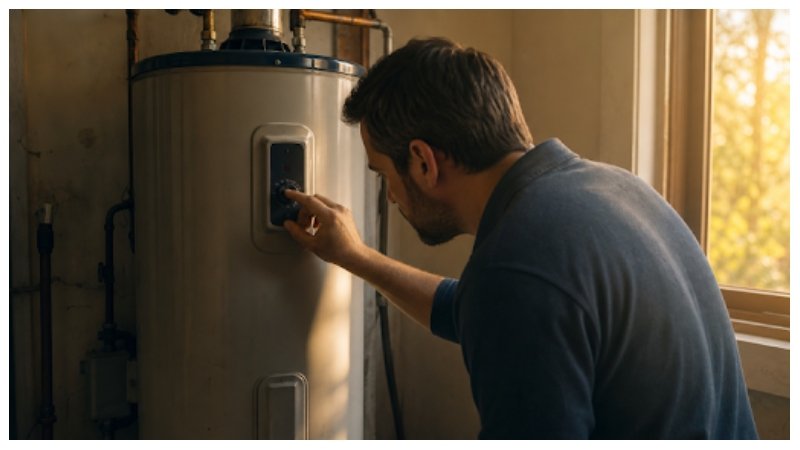
- Verify the temperature setting. A setting that was lowered accidentally can make water feel lukewarm and reduce usable shower time.
- Look for obvious power or fuel issues. An electric unit may have a tripped breaker. If there is any gas odor, leave the area and contact the gas utility or a qualified professional.
- Inspect for moisture. Check the floor, pipes, valves, and fittings around the heater for drips, rust, or pooling water.
- Listen carefully. Popping, cracking, or rumbling sounds can signal mineral deposits in a tank.
- Find the model label. Note the unit’s age, fuel type, capacity, and model number before calling for service.
Common Causes Of Weak Or Short-Lived Hot Water
Mineral And Sediment Buildup
Over time, minerals in the water can settle at the bottom of a storage tank. This sediment can interfere with heat transfer, reduce effective capacity, and cause rumbling or popping as water moves through deposits. Homes with hard water may experience this issue sooner. A professional can determine whether flushing is appropriate, especially for an older unit where disturbing heavy buildup could expose existing weaknesses.
Failed Heating Components
Electric water heaters typically use upper and lower heating elements. When one element fails, the unit may still provide some warm water but run out much sooner than normal. Gas models can develop burner, pilot, venting, thermostat, or control issues that limit heating performance. These components should be tested by a qualified technician rather than guessed at or replaced blindly.
Broken Dip Tube Or Fixture Mixing
A dip tube sends incoming cold water toward the lower area of a storage tank. If it cracks or breaks, cold water can mix with hot water near the outlet, shortening the available supply. A worn shower cartridge or faulty mixing valve can create similar symptoms, particularly if the problem occurs at only one fixture.
Incorrect Temperature Setting
A lower setting may be the entire explanation, but turning the temperature up aggressively is not always the answer. Excessively hot water raises scald risk, particularly for children, older adults, and anyone with reduced sensitivity to heat. Follow the manufacturer’s instructions and consider anti-scald protection where it is appropriate.
How Tank Size And Household Demand Work Together
A water heater can be mechanically sound and still be too small for the household. The key issue is peak demand, not simply the number of people living in the home. Several long showers in a row can overwhelm a tank that otherwise performs well during the day.
Before choosing a larger replacement, consider:
- The number of people who use hot water during the busiest hour.
- Typical shower length and showerhead flow rate.
- Whether the household regularly fills a bathtub.
- Whether laundry and dishwashing run during morning or evening peak periods.
- Available gas, electrical capacity, venting, and installation space.
- Future plans, such as adding a bathroom or expanding the household.
Water heating is a meaningful part of household energy use, so capacity should be balanced with efficiency. A larger tank is not automatically better if it creates unnecessary standby energy use or does not fit the home’s installation conditions.
Tank, Tankless, And Heat Pump Options
Different systems solve different problems. Understanding basic water heating basics can make replacement conversations easier and help homeowners compare options without assuming one type is right for every property.
- Storage tank systems: A familiar choice that keeps a reserve of heated water ready for use. They are widely available and straightforward, but stored capacity is limited, and standby heat loss can occur.
- Tankless systems: These heat water as it flows, which can provide extended hot water when demand stays within the unit’s flow limits. Installation can cost more, and larger households may need careful sizing or multiple units.
- Heat pump water heaters: These all-electric systems can be highly efficient in suitable conditions. They need adequate clearance, airflow, and an environment that supports efficient operation.
Simple Maintenance, Repair Decisions, And Safety
Regular attention can reveal concerns before they become disruptive. Make a monthly visual check for moisture, corrosion, damaged connections, and clutter around the unit. Seasonally, note changes in recovery time, water temperature, unusual sounds, and utility bills. Periodically, review the manufacturer’s maintenance schedule and ask about anode-rod inspection for tank-style models. For additional practical context, this water heater maintenance advice explains why maintenance timing depends on the system and water conditions.
When Repair May Make Sense
- The tank body is sound, and there is no serious corrosion.
- The problem is a replaceable part, such as an element, thermostat, or valve.
- The unit is relatively young and has otherwise been reliable.
- The repair cost is reasonable compared with a properly sized replacement.
When Replacement May Be Better
- Water is leaking from the tank body rather than from a connection.
- Corrosion is widespread, and failures are becoming frequent.
- The system no longer supplies enough hot water for the home.
- Parts are difficult to obtain, or operating costs have risen without a usage change.
Stop troubleshooting and seek professional help if there is a gas odor, standing water near electrical equipment, smoke, scorching, repeated breaker trips, steam, extremely hot water, or a bulging and badly corroded tank. Never remove access covers, test live electrical parts, open gas connections, or relight equipment contrary to the manufacturer’s instructions.
Frequently Asked Questions
Why does hot water run out after one short shower?
Possible causes include a small tank, high recent demand, sediment, a failed heating element, a broken dip tube, or a fixture that mixes cold water into the hot supply.
Why is the water lukewarm instead of completely cold?
Lukewarm water often suggests partial heating, a thermostat problem, or cold-water mixing. It can also result from an overly low temperature setting.
Is a leaking water heater an emergency?
A small drip from a visible connection may be repairable, but water escaping from the tank itself is a serious warning sign. If it can be done safely, shut off the water supply and contact a qualified professional.
Are tankless systems always better?
No. They can be an excellent fit for some homes, but budget, installation conditions, flow demand, maintenance needs, and expected time in the home all matter.
Final Takeaway
Running out of hot water does not automatically require a full replacement. Start with safe observations, identify whether the issue affects one fixture or the entire home, and record the heater’s symptoms and age. A simple setting, usage pattern, or serviceable component may be the answer. When leaks, fuel, electrical concerns, or recurring failures are involved, professional evaluation is the safest path. Click here for more information.