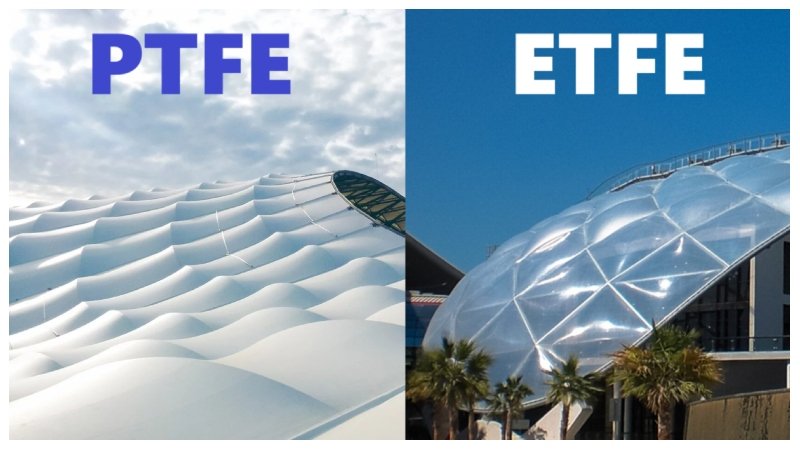
When most people outside the coatings industry hear “non-stick coating,” they think of cookware. The category they’re thinking of — PTFE, sold under the brand name Teflon — is one of the most recognizable materials in consumer manufacturing. But the fluoropolymer family that PTFE belongs to is considerably larger and more differentiated than cookware applications suggest, and in industrial coating contexts, the choice between PTFE, PFA, FEP, ETFE, and related fluoropolymers is not a matter of preference or availability. It is a technical specification decision with direct consequences for coating performance, process compatibility, and long-term operating cost.
The companies that get this decision wrong don’t usually discover the error immediately. They discover it when a coating fails prematurely in service, when a chemical process attack degrades the coating in ways the product data sheet didn’t clearly predict, when a temperature excursion reveals that the selected fluoropolymer’s continuous service limit was lower than assumed, or when an abrasive process environment wears through a coating system that a different formulation would have survived.
What unites the fluoropolymer family — and what differentiates it.
All fluoropolymers share a structural foundation: carbon chains in which hydrogen atoms have been partially or fully replaced by fluorine. The fluorine-carbon bond is one of the strongest in organic chemistry, which is why the fluoropolymer family as a class is chemically inert, thermally stable, and difficult to wet or stick to. These shared properties explain why different fluoropolymers are all grouped under the “non-stick” category and why they serve broadly similar functions in industrial coating applications.
What differentiates the fluoropolymers from each other are the specific molecular architecture choices — which atoms beyond fluorine and carbon are present, in what arrangement, and at what proportions — that determine the practical performance envelope of each material.
PTFE: maximum inertness, maximum temperature resistance, lowest coefficient of friction.
By combining heat resistance with almost total chemical inertness, excellent dielectric stability, and a low coefficient of friction, PTFE coatings offer a balance of properties unbeatable by any other material. PTFE is the fully fluorinated polymer — every hydrogen position on the carbon backbone is occupied by fluorine. Leaving no reactive sites that chemical agents can attack.
The consequence of this full fluorination is a material with the broadest chemical resistance profile in the fluoropolymer family. PTFE resists attack from essentially all industrial chemicals — acids, bases, solvents, oxidizers — across a very wide temperature range. Its continuous service temperature reaches 500°F. Its coefficient of friction is among the lowest of any known solid.
The practical limitation of PTFE in industrial coating applications is processability. PTFE does not melt and flow in the way that other fluoropolymers do. It cannot be applied by melt extrusion or injection molding, It is applied as a dispersion or powder coating. Sintered at high temperatures, and the resulting coating is somewhat porous in thin layers and limited in the film builds achievable without compromising performance. Click here for more information.
PFA: melt-processable with performance approaching PTFE.
Perfluoroalkoxy alkane — PFA — was developed specifically to address PTFE’s processability limitations while preserving most of its performance characteristics. PFA contains the same fully fluorinated carbon backbone as PTFE plus Perfluoroalkoxy side chains that introduce melt processability without meaningfully compromising chemical resistance or thermal stability.
PFA powder topcoats offer excellent release and abrasion resistance. PFA has a very high temperature resistance of 500°F continuous and can be applied in multiple coats to achieve film builds as high as 8 mils.
The ability to build thicker coatings is PFA’s critical practical advantage over PTFE in applications requiring barrier performance — chemical containment, corrosion protection, or lining applications where a pinhole-free coating of meaningful thickness is required. Where PTFE’s sintering process limits film builds and can leave micro-porosity, PFA’s melt-flow behavior allows void-free thick coatings that provide genuine barrier protection.
FEP: lower temperature ceiling, superior optical clarity, excellent release.
Fluorinated ethylene propylene — FEP — is a copolymer with a lower melting point than PFA, which makes it more easily processed but limits its continuous service temperature to approximately 400°F rather than PFA’s 500°F. In applications where the temperature ceiling is not a constraint, FEP’s processing advantages and excellent surface characteristics — particularly its transparency and its very smooth, high-release surface — make it a preferred choice over PFA for optical or release-critical applications.
ETFE: structural strength when pure fluoropolymer isn’t required.
Ethylene tetrafluoroethylene — ETFE — introduces ethylene units into the carbon backbone alongside the fluorinated portions, producing a material that is mechanically tougher and more abrasion-resistant than PTFE, PFA, or FEP, at the cost of somewhat reduced chemical resistance. In applications where mechanical durability is a primary requirement — wire coating, structural lining applications, or environments involving particulate abrasion — ETFE’s strength advantage can outweigh the chemical resistance trade-off.
Why selecting the wrong fluoropolymer costs more than it appears.
The cost of an incorrect fluoropolymer selection usually doesn’t appear at purchase. It appears when a chemical process containing an aggressive solvent degrades an FEP coating that a PFA coating would have survived, forcing a premature re-coating event at full cost. It appears when a high-temperature processing cycle exceeds FEP’s continuous service limit and causes coating degradation that contaminates the process stream. It appears when a thinner-than-needed PTFE coating develops pinholes that allow corrosive attack on the underlying substrate over a service period that the specification assumed would be longer.
This is why Chemours industrial non-stick coatings are offered across the full fluoropolymer family — PTFE, PFA, FEP, ETFE, and specialty variants including Krytox and ETFE — rather than as a single formulation. The application requirements that determine which fluoropolymer is correct are real and specific, and the coating system that matches them is not the same across different industrial contexts. Getting the match right at specification is the investment that prevents the more expensive correction that a mis-specification eventually requires.