Table of Contents
- Importance of Proper Gym Flooring
- Types of Gym Flooring and Their Benefits
- Impact Absorption and Joint Protection
- Slip Resistance and Traction
- Maintenance and Longevity
- Real-Life Examples of Effective Gym Flooring
- Conclusion
When designing a gym, most people focus on equipment layouts and aesthetics, but the type of flooring often plays an even greater role in user safety. A gym’s flooring determines not only the overall feel of the space but also impacts injury prevention and user comfort. By choosing the right flooring for your gym, you can create a safer environment that supports both high performance and well-being. Whether building a new facility or upgrading an existing space, investing in professional gymnasium flooring installation is a proactive step towards protecting your community of athletes and fitness enthusiasts.
Properly selected gym flooring minimizes common injury risks like slips, trips, and falls, while also supporting the wide range of movements performed during workouts. The right surface can absorb shock from high-impact exercises, safeguard joints, and provide necessary traction underfoot. According to the Centers for Disease Control and Prevention (CDC), falls are a leading cause of injury in both sports and fitness environments, highlighting the importance of thoughtful flooring choices.
Importance of Proper Gym Flooring
Gym flooring is far more than a background feature; it is fundamental to the safety and functionality of any sports or fitness facility. Poor flooring can cause or exacerbate injuries, with the National Floor Safety Institute reporting that slips and falls account for over 1 million hospital emergency room visits each year. Many of these incidents occur in gyms where the surface fails to provide adequate grip or shock absorption.
A surface designed specifically for athletic activity provides stability and support, helping maintain good form and reducing the risk of accidents. This focus on safety also improves user confidence, encouraging more consistent workouts and higher participation rates. Choosing the right gym flooring, therefore, is an investment in both physical health and the gym’s reputation.
Types of Gym Flooring and Their Benefits
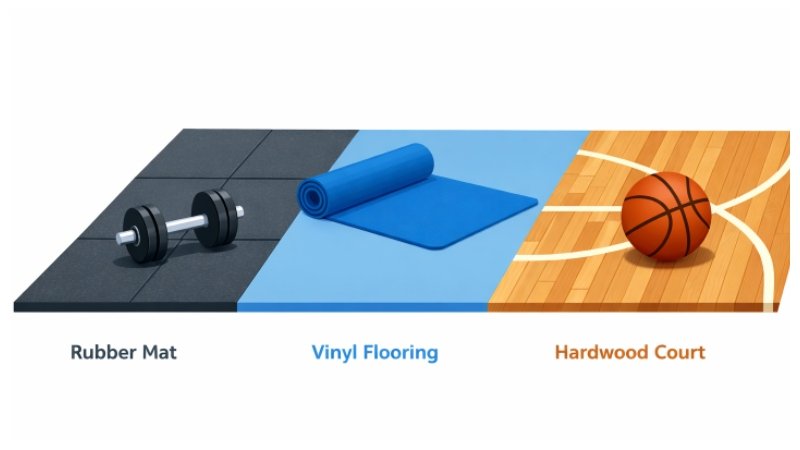
No single flooring material is perfect for every gym space. The choice should depend on the types of activities performed and the unique safety requirements of each area:
- Rubber Flooring: The gold standard for weightlifting zones. Rubber tiles and rolls cushion dropped weights, absorb shock, and offer unmatched durability under heavy equipment.
- Vinyl Flooring: Preferred for group fitness and aerobic studios, vinyl combines firmness and flexibility. The smooth finish is easy to clean and maintain, while still providing some softness for dynamic movement.
- Wood Flooring: Used in basketball and volleyball courts, properly finished hardwood surfaces offer energy return for jumps, stable footing, and a consistent playing field.
The ultimate goal is to select flooring that fits each space, supports the activities performed, and reduces injury risk. Facility operators often blend multiple flooring types throughout their gyms, allowing for specialized use in each area.
Impact Absorption and Joint Protection
High-impact exercises, such as jumping, plyometrics, or running, place significant stress on the lower body. Floors lacking shock absorption can transfer all that force back to the ankles, knees, hips, and spine. This increases the risk of repetitive stress injuries and acute trauma.
Modern gym floors are engineered with materials that dissipate energy, spreading the impact forces over a broader area. This helps protect users from chronic joint pain and allows athletes to push themselves without fearing cumulative damage. According to the American Council on Exercise, supportive flooring can lower the incidence of impact-related injuries, particularly among older adults and frequent gym-goers. Additionally, a well-designed surface will support a range of exercise modalities, from dynamic group classes to high-intensity interval training, enabling multiple user groups to safely enjoy the same facility.
Slip Resistance and Traction
Even the most advanced workout space is unsafe if users cannot maintain a solid footing. Workout shoes alone are not enough to prevent slips; the floor must also offer dependable traction. This is especially vital in areas with moisture, such as locker rooms, group fitness studios, and indoor tracks.
Choosing a floor with inherent slip resistance, such as textured rubber or specialty vinyl, tackles these risks at the source. Routine cleaning and prompt repair of worn or damaged spots also preserves traction over time. Neglecting floor maintenance can quickly turn a safe gym into a hazardous environment. It’s also important to consider seasonal factors, as rain, snow, or humidity can further affect traction, underscoring the need for year-round vigilance in gym maintenance routines.
Maintenance and Longevity
Maintaining gym flooring is crucial both for safety and cost efficiency. Quality materials may cost more initially, but they tend to last longer and require fewer replacements. Regular maintenance, such as cleaning, disinfecting, and promptly addressing minor damage, can dramatically extend the floor’s lifespan.
Gym owners who maintain routine maintenance minimize liability while protecting their investment. Well-cared-for flooring continuously provides the user with support, impact absorption, and slip resistance, reducing both short- and long-term injury risks. Staying ahead of repairs and maintaining surface cleanliness can also help preserve your gym’s aesthetic appeal, attract new members, and encourage loyalty among regular users.
Real-Life Examples of Effective Gym Flooring
Many leading sports facilities take their floors seriously, knowing firsthand the difference it can make. Research has shown that basketball courts using professional shock-absorbing flooring saw up to a 30 percent reduction in lower-limb injuries. Similarly, fitness studios with cushioned vinyl or rubberized surfaces report fewer joint pain complaints from participants.
These case studies underscore the value of recognizing gym flooring as a major factor in athletic and fitness safety, thereby reducing injury rates and improving long-term well-being for users.
Conclusion
Gym flooring is a foundational element in the design of a safe, practical, and enjoyable workout environment. Facility owners who consider impact absorption, traction, and regular upkeep can make a substantial difference in preventing injuries. Above all, prioritizing the right flooring is an investment in your gym’s members’ health and your facility’s long-term reputation. Click here for more information.