Key Takeaways
- Early detection of roof issues can save significant repair costs.
- Regular inspections help identify problems before they escalate.
- Addressing minor issues promptly prevents major structural damage.
Table of Contents
- Visible Water Damage Inside the Building
- Ponding Water on the Roof
- Membrane Deterioration and Surface Irregularities
- Flashing and Edge Details
- Increased Energy Bills
- Sagging or Uneven Roof Surface
- Age of the Roof
- Conclusion
Maintaining a commercial roof is crucial for protecting your building, assets, and operations. Recognizing early warning signs can prevent costly repairs and extend the lifespan of your roof. Scheduling a commercial roof inspection by Delta Innovative Services, Inc can help identify and address potential issues promptly. Delta Innovative Services, based in Kansas City, specializes in comprehensive commercial roofing solutions, ensuring your roof remains in top condition to protect your business.
Visible Water Damage Inside the Building
Water stains on ceilings or walls, damp spots, or unexpected puddles are clear indicators that your roof may be compromised. Even small leaks can lead to insulation damage, mold growth, and weakened structural components if not addressed quickly.
It is also important to note that the source of water intrusion may not always be directly above the visible stain. Water can travel along beams, pipes, or insulation before becoming apparent. This makes diagnosis challenging, but further underscores the importance of professional assessment. If you notice more frequent or persistent damp spots after rain, this could signal a worsening breach in the roof membrane or flashing. Mold is not just unsightly; it can trigger respiratory issues and allergies for your building’s occupants, making water damage a health concern as well as a structural one.
Ponding Water on the Roof
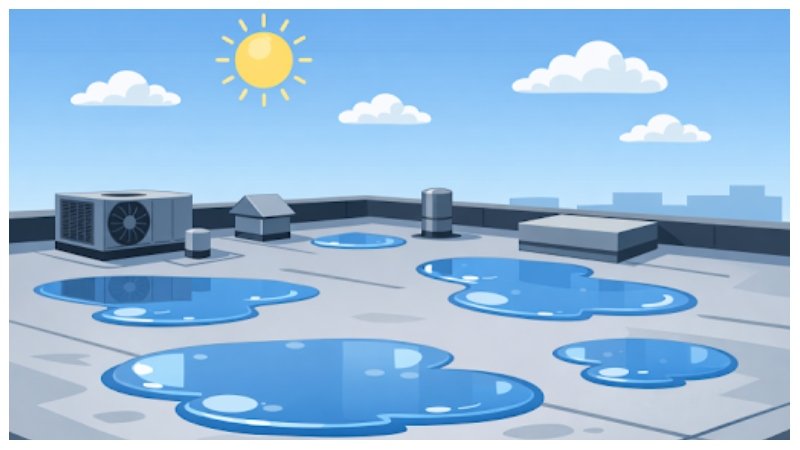
Flat or low-slope roofs are prone to water pooling if drainage is inadequate. Standing water that doesn’t evaporate within 48 hours increases the risk of membrane breakdown, leaks, and even collapse. If you notice puddles on your roof after a rainstorm, it’s time for a professional inspection.
Ponding can also accelerate the deterioration of roofing materials and promote the growth of algae or moss, which further degrades the surface. Over time, the additional weight of ponded water places stress on the structural decking beneath, potentially causing bowing or deformation. This issue is often a sign that roof drains, or scuppers, have become clogged or that the roof slope is insufficient. Regular cleaning and routine checkups during seasonal maintenance can prevent this issue from escalating.
Membrane Deterioration and Surface Irregularities
The roof membrane is the primary waterproofing layer in most commercial roofing systems. When it begins to fail, visual and tactile clues often emerge well before leaks are reported.
- Cracking, Blistering, or Surface Splitting: Thermal movement, UV exposure, and age can cause membranes to crack, blister, or separate. Blisters may indicate trapped moisture or air beneath the surface, while cracking often signals material fatigue. These conditions reduce waterproofing performance and typically worsen over time if left unaddressed.
- Seam Separation or Shrinkage: In single-ply systems, seams are critical failure points. Separation at welded or adhered seams can allow moisture to migrate beneath the membrane. Shrinkage around edges or penetrations may also pull materials away from secure attachment points, increasing vulnerability during storms.
Other surface irregularities, such as bubbling or excessive granule loss, may be less obvious but are equally concerning. Small defects often herald more extensive underlying damage. Shine a flashlight across the surface at a low angle—ripples or soft spots are signs the substrate or insulation may be compromised.
Flashing and Edge Details
Flashing protects transitions where the roof meets walls, curbs, and penetrations. Cracked sealants, lifted flashing, or corrosion around these areas can create direct paths for water intrusion beneath the roof assembly.
Over time, building movement, weather fluctuations, and UV exposure cause sealants to lose flexibility or adhesion. Pay special attention to roof edges, skylights, vent pipes, HVAC curbs, and expansion joints. If you see rust stains around metal flashings or feel spongy areas at the perimeter, consult a roofing specialist immediately. Edge failures are a common point of entry for moisture, and addressing them quickly prevents much larger issues down the line.
Increased Energy Bills
A sudden spike in heating or cooling costs may indicate a problem with your roof’s insulation. Compromised insulation, membrane gaps, or moisture intrusion can all reduce your building’s energy efficiency.
If your HVAC system seems to be running overtime, or occupants complain about uneven temperatures despite no change in usage, degraded insulation or air leaks through the roof may be responsible. Wet insulation loses much of its thermal resistance, allowing conditioned or heated air to escape. Over time, not only do utility costs rise, but the risk of mold or mildew growth increases as the roof assembly remains damp. Energy audits can pinpoint areas of heat loss attributable to roofing issues.
Sagging or Uneven Roof Surface
A sagging section of the roof is a red flag. It could indicate water damage, structural failure, or saturated insulation beneath the membrane. This is more than a cosmetic issue; it’s a safety risk that should be addressed immediately.
Persistent roof deflections may signal weakened decking or joists, particularly if the building was exposed to prolonged periods of standing water. Sagging may progress quickly, especially in aging roofs or areas with repeated drainage problems. Delays can lead to progressive collapse and interior damage. Professionally identifying the cause, whether rot, rust, or broken supports, is vital before planning repairs or reinforcements.
Age of the Roof
Even if you haven’t noticed visible issues, an older roof should be evaluated regularly. Most commercial roofing systems begin to show wear around 15–20 years. Proactive inspections can uncover early warning signs and help you plan repairs or replacement on your timeline, not during a crisis.
Periodic professional inspections provide peace of mind, as experienced contractors may identify problems invisible to the untrained eye. Many manufacturers’ warranties require regular maintenance to remain valid, so keeping a record of inspections is wise. Planning for future replacement based on age and condition allows you to budget responsibly and avoid panicked, last-minute expenses.
Conclusion
Regular inspections and maintenance are essential to keep your commercial roof in optimal condition. If you notice any of these signs, consider scheduling a commercial roof inspection by Delta Innovative Services, Inc. Delta Innovative Services, based in Kansas City, specializes in comprehensive commercial roofing solutions, ensuring your roof remains in top condition to protect your business.
Investing in proper commercial roof maintenance offers long-term benefits, from extending roof lifespan to minimizing disruptions to your operations. Neglecting small problems can lead to expensive repairs, tenant complaints, or even business shutdowns in extreme cases. Being proactive protects not only your bottom line, but also your reputation as a responsible property manager or business owner.
Remember, each roofing system is unique, and what may be a minor problem on one building could lead to a major repair on another. By acting early and partnering with experienced professionals, you safeguard your investment and maintain a safe, comfortable environment for everyone inside your building. Click here for more information.